Kód: 20542004
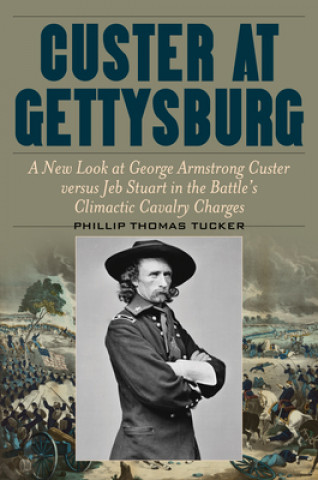
Custer at Gettysburg
Autor Phillip Thomas Tucker
George Armstrong Custer is famous for his fatal defeat at the Little Bighorn in 1876, but Custer’s baptism of fire came during the Civil War. After graduating last in the West Point class of 1861, Custer served from the First Batt ... celý popis


- Jazyk:
 Angličtina
 - Vazba: Pevná
- Počet stran: 432
Nakladatelství: Stackpole Books, 2020
- Více informací o knize

672 Kč
Dostupnost:
50 % šance Máme informaci, že by titul mohl být dostupný. Na základě vaší objednávky se ho pokusíme do 6 týdnů zajistit.
Prohledáme celý svět
Mohlo by se vám také líbit
-

Claymore, Vol. 8
181 Kč -

How People Change
365 Kč -

North Korea: Like Nowhere Else
480 Kč -

Abandono escolar
489 Kč -

Bogenweichen
348 Kč -

MAGICAL MUDRAS - AN EARTH LODG
319 Kč -

RASOS DE PEGUERA SERRA D'ENSIJA
475 Kč -

End of Days
403 Kč -

Biologie et Ecologie des poissons les plus pêchés et vendus à Kindu
1318 Kč -

Landrecies to Cambrai
1799 Kč -

Vacaciones con Violeta
487 Kč -

Wyrównane rachunki. Kobiety z odzysku. Tom 4 wyd. 2024
258 Kč -

Megan Marie and the Faery Ring
537 Kč -

Queen of America
744 Kč
Dárkový poukaz: Radost zaručena
- Darujte poukaz v libovolné hodnotě a my se postaráme o zbytek.
- Poukaz se vztahuje na celou naši nabídku.
- Elektronický poukaz vytisknete z e-mailu a můžete ihned darovat.
- Platnost poukazu je 12 měsíců od data vystavení.
Informovat o naskladnění knihy
Zadejte do formuláře e-mailovou adresu a jakmile knihu naskladníme, zašleme vám o tom zprávu. Pohlídáme vše za vás.
Více informací o knize Custer at Gettysburg
Nákupem získáte 67 bodů
 Anotace knihy
George Armstrong Custer is famous for his fatal defeat at the Little Bighorn in 1876, but Custer’s baptism of fire came during the Civil War. After graduating last in the West Point class of 1861, Custer served from the First Battle of Bull Run (only a month after graduation) through Appomattox, where he witnessed the surrender. But Custer’s true rise to prominence began at Gettysburg in 1863.
On the eve of the Battle of Gettysburg, only twenty-three years old and barely two years removed from being the goat of his West Point class, Custer received promotion to brigadier general and command – his first direct field command – of the Michigan Cavalry Brigade, the “Wolverines.” Now that he held general rank, Custer felt comfortable wearing the distinctive, some said gaudy, uniform that helped skyrocket him into fame and legend. However flashy he may have been in style, Custer did not disappoint his superiors, who promoted him in a search for more aggressive cavalry officers. At approximately noon on July 3, 1863, Custer and his men heard enemy cannon fire: Stuart’s signal to Lee that he was ready for action. Thus began the melee that was East Cavalry Field at Gettysburg. Much back and forth preceded Custer’s career-defining action. An hour or two into the battle, after many of his cavalrymen had been reduced to hand-to-hand infantry-style fighting, Custer ordered a charge of one of his regiments and led it into action himself, screaming one of the battle’s most famous lines: “Come on, you Wolverines!” Around three o’clock, Stuart mounted a final charge, which mowed down Union cavalry – until it ran into Custer’s Wolverines, who stood firm, with Custer wielding a sword at their head, and broke the Confederates’ last attack.
In a book combining two popular subjects, Tucker recounts the story of Custer at Gettysburg with verve, shows how the Custer legend was born on the fields of the war’s most famous battle, and offers eye-opening new perspectives on Gettysburg’s overlooked cavalry battle.
Parametry knihy
Zařazení knihy Knihy v angličtině Humanities History Military history
672 Kč
- Plný název: Custer at Gettysburg
- Autor: Phillip Thomas Tucker
- Jazyk: Angličtina
- Vazba: Pevná
- Počet stran: 432
- EAN: 9780811738538
- ISBN: 9780811738538
- ID: 20542004
- Nakladatelství: Stackpole Books
- Hmotnost: 772 g
- Rozměry: 163 × 235 × 36 mm
- Datum vydání: 01. January 2020
Oblíbené z jiného soudku
-

Lost Victories
437 Kč -

Unholy Alliance
508 Kč -

Fate is the Hunter
314 Kč -

Templars
276 Kč -

Higher Call
292 Kč -

Crusaders
276 Kč -

Strategy
300 Kč -
Get Tough!
341 Kč -

White War
362 Kč -

Samurai Weapons
385 Kč -

What It Is Like To Go To War
292 Kč -

Hiroshima
266 Kč -

Kill Anything That Moves
365 Kč -

Stuka Pilot
568 Kč -

The Personal Memoirs of Ulysses S. Grant
381 Kč -

Sacrifice on the Steppe
543 Kč -

Hitler's Russian & Cossack Allies 1941-45
340 Kč -

Battle of the Bulge
334 Kč -

Operation Archery
410 Kč -

First World War
445 Kč -

Jasta 18
467 Kč -

Survivors of Stalingrad
439 Kč -

Warriors
391 Kč -

British Cruisers of the Victorian Era
1714 Kč -

Nazi and the Psychiatrist
365 Kč -

With the Old Breed
194 Kč -

Psychology of Intelligence Analysis
513 Kč -

U.S. Army Vehicle Markings 1944
699 Kč -

Helmet for my Pillow
336 Kč -

Battles Map by Map
621 Kč -

Shattered Sword
567 Kč -

Century Series: USAF Quest for Air Supremacy, 1950-1960: F-100 o F-101 o F-102 o F-104 o F-105 o F-106
956 Kč -
Joachim Peiper
1025 Kč -

Stalingrad
276 Kč -

Rations of the German Wehrmacht in World War II
1263 Kč -

Bayonets of the First World War
496 Kč -

M-1 Helmet of the World War II GI
1416 Kč -

TM 9-803 Willys-Overland MB and Ford Model GPW Jeep Technical Manual
365 Kč -

All-In Fighting
237 Kč -

Germanicus: The Magnificent Life and Mysterious Death of Rome's Most Popular General
431 Kč -

SS Dirlewanger Brigade
256 Kč -

Pegasus Bridge
267 Kč -

5th SS Division Wiking at War 1941-1945: History of the Division
356 Kč -

Fighting ships of World War Two 1937 - 1945. Volume VIII. Europe.
451 Kč -

Fighting ships of World War Two 1937 - 1945. Volume IX. Asia, Africa, Latin America.
246 Kč -

Panther Project Vol 2
785 Kč -

Operation Garbo
226 Kč -
Napoleon's Imperial Guard Uniforms and Equipment
982 Kč -

No Good Men Among the Living
335 Kč
Osobní odběr Praha, Brno a 46879 dalších
Copyright ©2008-26 nejlevnejsi-knihy.cz Všechna práva vyhrazenaSoukromíCookies

 Vrácení do měsíce
 571 999 099 (8-15.30h)