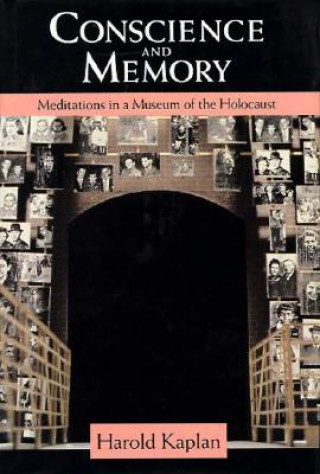
Kód: 04039146
Conscience and Memory
Autor Harold Kaplan
Prompted by the suicides of Jean Amery and Primo Levi, Harold Kaplan sought to find out what the Holocaust can be said to affirm even in the face of its overwhelming negation of meaning. "I wrote this book," he explains, "to trans ... celý popis


- Jazyk:
 Angličtina
 - Vazba: Pevná
- Počet stran: 230
Nakladatelství: University of Chicago Press, 1994
- Více informací o knize

701 Kč
Dostupnost:
50 % šance Máme informaci, že by titul mohl být dostupný. Na základě vaší objednávky se ho pokusíme do 6 týdnů zajistit.
Prohledáme celý svět
Mohlo by se vám také líbit
-

Criminal Volume 4: Bad Night
327 Kč -

Brisingr
519 Kč -

Briefe an Milena
410 Kč -

Názvoslovie anorganických látok
233 Kč -

Crystal Frontier
398 Kč -

Blank Cookbook For Kids
308 Kč -

Sexual Desire Disorders
3108 Kč -

Confident Mother
341 Kč -
Encyclopedia of Philosophy
58071 Kč -
The Motor Boys in Mexico
728 Kč -

Europe in Crisis
2881 Kč -

The 201 on Building Web API with ASP.NET Core MVC
258 Kč -
George Gascoigne, A Hundreth Sundrie Flowres
14913 Kč -

Les Eglises Du Refuge En Angleterre. Tome 1
743 Kč
Dárkový poukaz: Radost zaručena
- Darujte poukaz v libovolné hodnotě a my se postaráme o zbytek.
- Poukaz se vztahuje na celou naši nabídku.
- Elektronický poukaz vytisknete z e-mailu a můžete ihned darovat.
- Platnost poukazu je 12 měsíců od data vystavení.
Informovat o naskladnění knihy
Zadejte do formuláře e-mailovou adresu a jakmile knihu naskladníme, zašleme vám o tom zprávu. Pohlídáme vše za vás.
Více informací o knize Conscience and Memory
Nákupem získáte 70 bodů
 Anotace knihy
Prompted by the suicides of Jean Amery and Primo Levi, Harold Kaplan sought to find out what the Holocaust can be said to affirm even in the face of its overwhelming negation of meaning. "I wrote this book," he explains, "to translate the Holocaust out of the moral and intellectual shock which contemplates the alienation of humanity from itself. I wished to understand the "crime against humanity" as a viable category of the moral reason. And I wished to respond to the written testimony of Holocaust victims and survivors as if the issue of their survival were present to us today." Kaplan simulates the response to a long visit to the new Holocaust museum in Washington, DC, which, crucially for Kaplan, is sited in direct view of the Jefferson and Lincoln monuments, powerful symbols of humanist democracy. He insists the Holocaust be viewed not only in terms of personal ethics but modern political ethics as well: for Kaplan the affirmative legacy of the Holocaust is its focus on the dangers of nationalism, racism and all forms of separatist group identities. It challenges the historicism, cults of power and scientistic politics of modernity. And it challenges the moral passivity and relativism of mass politics in Western and Eastern societies. The opening of the Holocaust museum has sparked a debate that reflects a larger debate over the Holocaust's "meaning," its translatability for ordinary understanding. Some deny any possible response except that of overwhelming grief and horror. For others, the "lesson" of the Holocaust implies, in the words of Robert Nozick, that "mankind has fallen...Humanity has lost its claim to continue." The moral life and political institutions will remain endlessly tormented by the Holocaust. That, Kaplan tells us, is the ultimate content of its "meaning", and is what makes the discussion of "meaning" much more than a mourner's symposium. The museum itself, according to Kaplan, has become an impressive memorial to the principle of humanism, instructing the collective memory of this democracy and that of nations everywhere which aspire to civil existence. Out of its awful darkness the Holocaust throws the light of conscience for those capable of receiving it.
Parametry knihy
Zařazení knihy Knihy v angličtině Humanities History History: specific events & topics
701 Kč
- Plný název: Conscience and Memory
- Autor: Harold Kaplan
- Jazyk: Angličtina
- Vazba: Pevná
- Počet stran: 230
- EAN: 9780226424163
- ID: 04039146
- Nakladatelství: University of Chicago Press
- Hmotnost: 566 g
- Rozměry: 234 × 160 × 21 mm
- Datum vydání: 01. January 1994
Oblíbené z jiného soudku
-

Man's Search for Meaning
204 Kč -

Man's Search For Meaning
260 Kč -

Women, Race & Class
244 Kč -

Man's Search For Meaning
335 Kč -
Black Skin, White Masks
248 Kč -
Monk
203 Kč -
More Money Than God
375 Kč -

Che Guevara
526 Kč -

Billion Dollar Spy
276 Kč -

Night
219 Kč -

Empire of Death
801 Kč -

Imperialism: The Highest Stage of Capitalism
185 Kč -

Delirious New York
608 Kč -
Ascent of Money
342 Kč -

Thomas Sankara Speaks
335 Kč -

Beauty and Cosmetics 1550 to 1950
240 Kč -

Operation Paperclip
864 Kč -

Hess and the Penguins
334 Kč -

The Russian Revolution
489 Kč -
What It Means To Be Human
705 Kč -

Stuff and Money in the Time of the French Revolution
655 Kč -

Dance in the Renaissance
908 Kč -

If This Is A Man/The Truce
349 Kč -

Slave's Cause
579 Kč -

Eichmann in Jerusalem
276 Kč -

The Complete MAUS
358 Kč -

The Rape of Nanking
350 Kč -
Homo Deus
276 Kč -

Knight's Own Book of Chivalry
602 Kč -

State and Revolution
280 Kč -

Invisible Armies
494 Kč -

Guns, Germs and Steel
276 Kč -

Discourse on Colonialism
261 Kč -
Society of the Spectacle
267 Kč -

Night
250 Kč -

Great Cities in History
293 Kč -

Empires of the Sea
292 Kč -

World Football Club Crests
397 Kč -
Nuremberg Diary
365 Kč -

Diary of a Young Girl
169 Kč -
Football in Sun and Shadow
248 Kč -

Auschwitz: A Doctor's Eyewitness Account
248 Kč -

Call The Midwife
235 Kč -

Shadows Of The Workhouse
248 Kč -

Black Earth
276 Kč -

Robespierre
380 Kč -

Farewell To The East End
248 Kč -

Brief History of Misogyny
326 Kč -

In the Rose Garden of the Martyrs
231 Kč
Osobní odběr Praha, Brno a 48398 dalších
Copyright ©2008-26 nejlevnejsi-knihy.cz Všechna práva vyhrazenaSoukromíCookies

 Vrácení do měsíce
 571 999 099 (8-15.30h)