Kód: 09531653
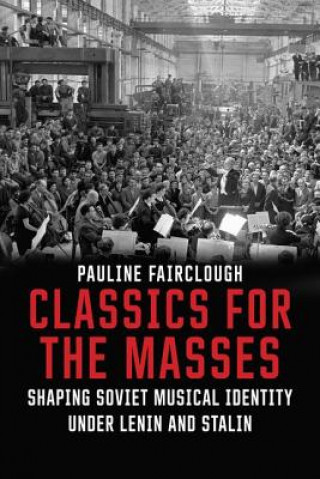
Classics for the Masses
Autor Pauline Fairclough
Musicologist Pauline Fairclough explores the evolving role of music in shaping the cultural identity of the Soviet Union in a revelatory work that counters certain hitherto accepted views of an unbending, unchanging state policy o ... celý popis


- Jazyk:
 Angličtina
 - Vazba: Pevná
- Počet stran: 296
Nakladatelství: Yale University Press, 2016
- Více informací o knize


Mohlo by se vám také líbit
-

Where the Crawdads Sing
413 Kč -

Complicated Love Story Set in Space
415 Kč -

First Humans
3297 Kč -

Calendrier Coloriages Chats en 365 jours - L'Année à Bloc
423 Kč -

Cambridge Companion to the Roman Historians
1178 Kč -

Conoscere Il Territorio: Arte e Storia Delle Madonie. Studi in Memoria Di Nico Marino, Vol. II
427 Kč -

Polio Boulevard
618 Kč -

How to KILL The Ball
1611 Kč -

Buses, Coaches & Recollections No. 105 1978
480 Kč -

Defence Intelligence and the Cold War
4165 Kč -

Cognition and Image Formation in Literature
1922 Kč -

Veszélyben a boldogság
283 Kč -

Book of Oziah
774 Kč -
Report of the Board of Regents
924 Kč
Dárkový poukaz: Radost zaručena
- Darujte poukaz v libovolné hodnotě a my se postaráme o zbytek.
- Poukaz se vztahuje na celou naši nabídku.
- Elektronický poukaz vytisknete z e-mailu a můžete ihned darovat.
- Platnost poukazu je 12 měsíců od data vystavení.
Více informací o knize Classics for the Masses
Nákupem získáte 110 bodů
 Anotace knihy
Musicologist Pauline Fairclough explores the evolving role of music in shaping the cultural identity of the Soviet Union in a revelatory work that counters certain hitherto accepted views of an unbending, unchanging state policy of repression, censorship, and dissonance that existed in all areas of Soviet artistic endeavor. Newly opened archives from the Leninist and Stalinist eras have shed new light on Soviet concert life, demonstrating how the music of the past was used to help mold and deliver cultural policy, how "undesirable" repertoire was weeded out during the 1920s, and how Russian and non-Russian composers such as Mozart, Tchaikovsky, Wagner, Bach, and Rachmaninov were "canonized" during different, distinct periods in Stalinist culture. Fairclough's fascinating study of the ever-shifting Soviet musical-political landscape identifies 1937 as the start of a cultural Cold War, rather than occurring post-World War Two, as often maintained, while documenting the efforts of musicians and bureaucrats during this period to keep musical channels open between Russia and the West.
Parametry knihy
Zařazení knihy Knihy v angličtině Humanities History Regional & national history
1097 Kč
- Plný název: Classics for the Masses
- Podnázev: Shaping Soviet Musical Identity Under Lenin and Stalin
- Autor: Pauline Fairclough
- Jazyk: Angličtina
- Vazba: Pevná
- Počet stran: 296
- EAN: 9780300217193
- ISBN: 0300217196
- ID: 09531653
- Nakladatelství: Yale University Press
- Hmotnost: 638 g
- Rozměry: 244 × 166 × 33 mm
- Datum vydání: 05. April 2016
Oblíbené z jiného soudku
-

Hundred Years' War on Palestine
260 Kč -

Bury My Heart At Wounded Knee
276 Kč -
24 Hours in Ancient Rome
235 Kč -

Palestine
416 Kč -

Reflections on the Revolution in France
258 Kč -

Black Hawk Down
335 Kč -

On China
407 Kč -

Ancient Iraq
373 Kč -

Frederick the Great
227 Kč -

We Were Soldiers Once...And Young
248 Kč -

Austrian Commanders of the Napoleonic Wars
414 Kč -

Medieval Russia, 980-1584
1121 Kč -

Anglo-Saxon Chronicle
475 Kč -

Sumer and the Sumerians
1298 Kč -

Genghis Khan
381 Kč -

Benjamin Franklin
336 Kč -

Easy Company Soldier
335 Kč -

Children of Ash and Elm
400 Kč -

History of the Renaissance World
645 Kč -

Pirate Ship 1660-1730
343 Kč -

God's Playground: A History of Poland, Vol. 1
1535 Kč -

Don Troiani's American Battles
608 Kč -

Pax Britannica
315 Kč -

Annals & The Histories
350 Kč -

Spanish Civil War
323 Kč -

Badges and Uniforms of the Royal Air Force
336 Kč -

Ancien Regime and the Revolution
312 Kč -

Heaven's Command
352 Kč -

Unfinished Empire
293 Kč -

German Fighter Ace Werner Molders:: An Illustrated Biography
860 Kč -

Dutch Overseas Empire, 1600-1800
882 Kč -

Russia Under the Old Regime
343 Kč -

Tomahawk and Musket
431 Kč -

Thracians 700BC-46AD
368 Kč -

Chinese Army 1937-49
338 Kč -

Institutions of Hanseatic Trade
1480 Kč -

British Army in World War I (2)
382 Kč -

Chinese Civil War Armies 1911-49
338 Kč -

Santa Anna's Army
414 Kč -

Canadian Corps in World War I
360 Kč -

Middle Ground
723 Kč -

Britain Against Napoleon
445 Kč -

Wing Chun Warrior
318 Kč -

From Colony to Superpower
474 Kč -

History of Modern Europe - From 1815 to the Present
646 Kč -

Ukrainian Armies 1914-55
360 Kč -

History of Belarus
641 Kč -

Iranian F-14 Tomcat Units in Combat
450 Kč -

Kaiser's Warlords
414 Kč
Osobní odběr Praha, Brno a 46876 dalších
Copyright ©2008-26 nejlevnejsi-knihy.cz Všechna práva vyhrazenaSoukromíCookies

 Vrácení do měsíce
 571 999 099 (8-15.30h)