Kód: 04635190
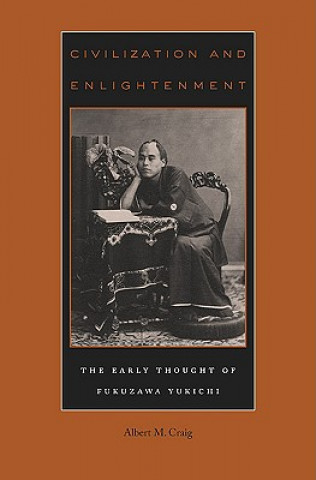
Civilization and Enlightenment
Autor Albert M. Craig
The idea that society progresses through stages of development, from savagery to civilization, arose in eighteenth-century Europe. Albert Craig traces how Fukuzawa Yukichi, deeply influenced by the Scottish Enlightenment, "transla ... celý popis


- Jazyk:
 Angličtina
 - Vazba: Pevná
- Počet stran: 212
Nakladatelství: Harvard University Press, 2009
- Více informací o knize


Mohlo by se vám také líbit
-

Cartoon Guide to Algebra
374 Kč -

Tvarované leporelo se zvuky - Zima
158 Kč -

Hudební nauka pro ZUŠ 1. ročník
106 Kč -

Browning Automatic Rifle, Caliber .30, M1918 Without Bipod
324 Kč -

Die Besten Western Klassiker
383 Kč -

Tužka grafitová 1703 1,2,3
28 Kč -

Effective Emails
322 Kč -

The Grapes of Wrath
791 Kč -

Great Hunt
191 Kč -

Друзья-динозаврики. Тайна
549 Kč -

Classic Tales Second Edition: Level 2: The Gingerbread Man
270 Kč -

Get The Glow
531 Kč -

Не верь всему, что чувствуешь. Как тревога и депрессия заставляют нас поверить тому, чего нет (#экопокет)
277 Kč -

Die Schnitger-Orgel in St. Pankratius
195 Kč -

Fast & Furious 6
131 Kč -

Carla Connor - Alison King! Queen of Coronation Street!
398 Kč -

Le delta des délices - 100 poésies érotiques
496 Kč -

Southern Discomfort: One Black Man and One White Man Change Segregation
30 Kč -

Eleventh Day
456 Kč -

Rätselheft für Kinder ab 7: Die besten Kinderrätsel
199 Kč -

Ting and the Possible Futures
244 Kč -
Inconsistent Consistency
422 Kč -

Solvation Dynamics and Charge Transfer Reactions
2071 Kč -

Derniers Contes
469 Kč -

Diary and Correspondence of Charles Abbot, Lord Colchester, Speaker of the House of Commons, 1802-1817 Volume 3
990 Kč -

LES FRIMEURS
266 Kč -

Bonfires of Culture
694 Kč -

Empirische Okonomie
947 Kč -

Bayerische Hinterhand
360 Kč -

Groot
259 Kč -

Five Years in Heaven
355 Kč -

Rational Drug Design
2533 Kč -

Prophetic Conflict
485 Kč -

Calming the Angry Storm: A journey to Peace and Serenity
527 Kč -

Damasco addio
618 Kč -
Objectivity in the Making
940 Kč -

Remaking of Christian Doctrine
442 Kč -

Buchholzen's in Italien
267 Kč -

Kindlers Literatur Lexikon (KLL)
4052 Kč -

Judenvernichtung. Die Bedeutung der Wehrmacht und der Einsatzgruppen
369 Kč -

Grundung der kanadischen Foerderation von 1867
369 Kč -

New Chemistry And New Opportunities From The Expanding Protein Universe - Proceedings Of The 23rd International Solvay Conference On Chemistry
3347 Kč -

Nutrition and Food Safety
1028 Kč -

Flying Machine in Gloucestershire
314 Kč -

English Guide for Bruges. Illustrated. 2nd Edition. Enlarged and Revised.
371 Kč -

Molecular Basis of Neurological Disorders and Their Treatment
4707 Kč -

Transferring ownership of public schools to local communities?
997 Kč -

Naturwissenschaften um 1800
1914 Kč -

Linear Networks And Systems: Algorithms And Computer-aided Implementations (2nd Edition) (In 2 Volumes)
1532 Kč
Dárkový poukaz: Radost zaručena
- Darujte poukaz v libovolné hodnotě a my se postaráme o zbytek.
- Poukaz se vztahuje na celou naši nabídku.
- Elektronický poukaz vytisknete z e-mailu a můžete ihned darovat.
- Platnost poukazu je 12 měsíců od data vystavení.
Více informací o knize Civilization and Enlightenment
Nákupem získáte 119 bodů
 Anotace knihy
The idea that society progresses through stages of development, from savagery to civilization, arose in eighteenth-century Europe. Albert Craig traces how Fukuzawa Yukichi, deeply influenced by the Scottish Enlightenment, "translated" the idea for Japanese society, both enriching and challenging the concept.Fukuzawa, an official in the Tokugawa government, saw his career collapse when the shogunate ended in 1867. Reinventing himself as a thinker and writer, he made his life work the translation and interpretation of the Western idea of the stages of civilization. He interpreted key Scottish intellectuals - Adam Smith, Adam Ferguson, William Robertson, John Millar; relied on American geographies to help explain how societies progress; and focused on invention as a key to civilization.By defining the role of "less developed" nations in the world order, Fukuzawa added a new dimension to the stage theory. But by the end of the 1880s, he had come to dismiss the philosophy of natural rights as "the fatuous idealism of Christian ministers." Though civilization - as represented by Britain - was still his goal for Japan, he no longer saw the West as a uniformly beneficial moral force.This engaging history offers an illuminating look at an important figure and the world of ideas in nineteenth-century Japan.
Parametry knihy
Zařazení knihy Knihy v angličtině Humanities Philosophy History of Western philosophy
1193 Kč
- Plný název: Civilization and Enlightenment
- Podnázev: The Early Thought of Fukuzawa Yukichi
- Autor: Albert M. Craig
- Jazyk: Angličtina
- Vazba: Pevná
- Počet stran: 212
- EAN: 9780674031081
- ISBN: 0674031083
- ID: 04635190
- Nakladatelství: Harvard University Press
- Hmotnost: 454 g
- Rozměry: 250 × 166 × 20 mm
- Datum vydání: 01. January 2009
Oblíbené z jiného soudku
-

Meditations
186 Kč -

The Myth of Sisyphus
169 Kč -

Nausea
250 Kč -
The Republic
297 Kč -

Beyond Good and Evil
250 Kč -

Ride the Tiger
427 Kč -

Discourses and Selected Writings
235 Kč -
Letters from a Stoic
226 Kč -

Simulacra and Simulation
375 Kč -

Aphorisms on Love and Hate
104 Kč -

On the Shortness of Life
178 Kč -

Phenomenology of Spirit
419 Kč -

The Nicomachean Ethics
235 Kč -

Anti-Oedipus
381 Kč -

Myth of Sisyphus
259 Kč -

The Sickness Unto Death
248 Kč -

Spell of the Sensuous
319 Kč -

Intellectual Life
389 Kč -

Letters from a Stoic
317 Kč -
Great Dialogues Of Plato
70 Kč -
The Symposium
209 Kč -

Meditations
316 Kč -

Leviathan
150 Kč -

Camera Lucida
235 Kč -

Twilight of the Idols with The Antichrist and Ecce Homo
167 Kč -

Groundwork for the Metaphysics of Morals
225 Kč -

Principles of Human Knowledge and Three Dialogues
240 Kč -

Fear and Trembling and The Sickness Unto Death
264 Kč -

Meditations
424 Kč -

Montaigne
292 Kč -
Plato: Five Dialogues
382 Kč -

History of Western Philosophy
490 Kč -
Dialogues and Essays
236 Kč -

Politics
269 Kč -

Sayings and Anecdotes
265 Kč -

Order of Things
638 Kč -

Candide and Other Stories
147 Kč -

Discourse on the Method
162 Kč -

Dark Ecology
534 Kč -

The End of Certainty
474 Kč -

Human, All Too Human
249 Kč -
History of Philosophy Volume 1
725 Kč -

Aristotle for Everybody
319 Kč -

Hegel: A Very Short Introduction
225 Kč -

Early Greek Philosophy
822 Kč -

Discourse On Method
630 Kč -

Homo Sacer
489 Kč -

Basic Works of Aristotle
428 Kč -

History of Philosophy
656 Kč
Osobní odběr Praha, Brno a 46029 dalších
Copyright ©2008-26 nejlevnejsi-knihy.cz Všechna práva vyhrazenaSoukromíCookies

 Vrácení do měsíce
 571 999 099 (8-15.30h)