Kód: 05034416
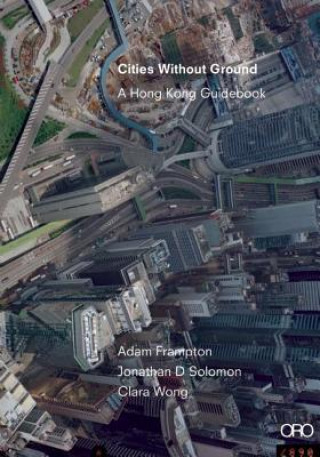
Cities Without Ground
Autor Solom Wong
Hong Kong is a city without ground. This is true both physically (built on steep slopes, the city has no ground plane) and culturally (there is no concept of ground). Density obliterates figure-ground in the city, and in turn re-d ... celý popis


- Jazyk:
 Angličtina
 - Vazba: Brožovaná
- Počet stran: 128
Nakladatelství: Oro Editions, 2012
- Více informací o knize

415 Kč
Dostupnost:
50 % šance Máme informaci, že by titul mohl být dostupný. Na základě vaší objednávky se ho pokusíme do 6 týdnů zajistit.
Prohledáme celý svět
Mohlo by se vám také líbit
-

GOOD OMENS
268 Kč -

Concrete Approach to Abstract Algebra
281 Kč
Dárkový poukaz: Radost zaručena
- Darujte poukaz v libovolné hodnotě a my se postaráme o zbytek.
- Poukaz se vztahuje na celou naši nabídku.
- Elektronický poukaz vytisknete z e-mailu a můžete ihned darovat.
- Platnost poukazu je 12 měsíců od data vystavení.
Informovat o naskladnění knihy
Zadejte do formuláře e-mailovou adresu a jakmile knihu naskladníme, zašleme vám o tom zprávu. Pohlídáme vše za vás.
Více informací o knize Cities Without Ground
Nákupem získáte 42 bodů
 Anotace knihy
Hong Kong is a city without ground. This is true both physically (built on steep slopes, the city has no ground plane) and culturally (there is no concept of ground). Density obliterates figure-ground in the city, and in turn re-defines public-private spatial relationships. Perception of distance and time is distorted through compact networks of pedestrian infrastructure, public transport and natural topography in the urban landscape.Without a ground, there can be no figure either. In fact, Hong Kong lacks any of the traditional figure-ground relationships that shape urban space: axis, edge, center, even fabric. Cities Without Ground explores this condition by mapping three-dimensional circulation networks that join shopping malls, train stations and public transport interchanges, public parks and private lobbies as a series of spatial models and drawings. These networks, though built piecemeal, owned by different public and private stakeholders, and adjacent to different programs and uses, form a continuous space of variegated environments that serves as a fundamental public resource for the city. The emergence of the shopping malls as spaces of civil society rather than of global capital-- as grounds of resistance-- comes as a surprise. This continuous network and the microclimates of temperature, humidity, noise and smell which differentiate it constitute an entirely new form of urban spatial hierarchy. The relation between shopping malls and air temperature, for instance, suggests architectural implications in circulation--differentiating spaces where pedestrians eagerly flow or make efforts to avoid, where people stop and linger or where smokers gather. Air particle concentration is both logical and counterintuitive: outdoor air is more polluted, while the air in the higher-end malls is cleaner than air adjacent to lower value retail programs. Train stations, while significantly cooler than bus terminals, have only moderately cleaner air. Boundaries determined by sound or smell (a street of flower vendors or bird keepers, or an artificially perfumed mall) can ultimately provide more substantive spatial boundaries than a ground. While space in the city may be continuous, plumes of temperature differential or air particle intensity demonstrate that environments are far from equal.
Parametry knihy
Zařazení knihy Knihy v angličtině The arts Architecture Public buildings: civic, commercial, industrial, etc
415 Kč
- Plný název: Cities Without Ground
- Podnázev: A Hong Kong Guidebook
- Autor: Solom Wong
- Jazyk: Angličtina
- Vazba: Brožovaná
- Počet stran: 128
- EAN: 9781935935322
- ISBN: 1935935321
- ID: 05034416
- Nakladatelství: Oro Editions
- Hmotnost: 268 g
- Rozměry: 201 × 144 × 10 mm
- Datum vydání: 25. August 2012
Oblíbené z jiného soudku
-

Fairbairn-Sykes Fighting Knife
956 Kč -

Flores & Prats: Sala Beckett
1086 Kč -

Luftwaffe Gravity Knife: A History and Analysis of the Flyer's and Paratroer's Utility Knife
860 Kč -

Architecture of Health
762 Kč -

Railroad Station
334 Kč -

Moderne Architektur Kalender 2027
569 Kč -

Layman's Guide to Classical Architecture
716 Kč -

Design Handbook for Stables and Equestrian Buildings
578 Kč -
Baikonur
783 Kč -

Detail in Contemporary Hotel Design
1012 Kč -

Hospital and Healthcare Facility Design
2306 Kč -

Building the Empire State
606 Kč -

Kindergartens
1276 Kč -

Concert Halls and Opera Houses
3971 Kč -

Eat! Best of Restaurant Design
430 Kč -

Airport Urbanism
680 Kč -

Victorian Woodturnings and Woodwork
256 Kč -

Hiroshi Sugimoto: Theaters
951 Kč -
Planning and Design of Outdoor Sports Facilities
403 Kč -

Library
715 Kč -

Guide to Building Natural Swimming Pools
802 Kč -

Container Atlas (Updated & Extended version)
1014 Kč -

Eichler
1025 Kč -

Hospital Architecture
1942 Kč -

One World Trade Center
715 Kč -

Library
2413 Kč -
New Pavilions
554 Kč -

Office Design. Architecture today
839 Kč -

Contemporary Market Architecture
952 Kč -
Architecture of Parking
524 Kč -
Holistic Retail Design
1227 Kč -

Walt Disney Imagineering
1198 Kč -

Successful Restaurant Design 3e
2481 Kč -
Hotel Design, Planning and Development
3604 Kč -
Fondation Louis Vuitton by Frank Gehry
1172 Kč -

World of Malls
496 Kč -

Mark Pimlott - The Public Interior as Idea and Project
854 Kč -

Animal Graves and Memorials
269 Kč -

Zoo Buildings. Construction and Design Manual
2431 Kč -
Heights
532 Kč -

German Swords of World War II - A Photographic Reference: Vol 1: Army
1605 Kč -
Empire State Building
458 Kč -

Archdaily's Guide to Good Architecture
1451 Kč -

Brooklyn Storefronts
353 Kč -

ARCHITECTURE without architecture
1420 Kč -

Rule of Logistics
668 Kč -

Big Ben
264 Kč -
Naked Airport
410 Kč -

Modern Clinic Design - Strategies for an Era of Change
2098 Kč
Osobní odběr Praha, Brno a 46632 dalších
Copyright ©2008-26 nejlevnejsi-knihy.cz Všechna práva vyhrazenaSoukromíCookies

 Vrácení do měsíce
 571 999 099 (8-15.30h)