Kód: 53783795
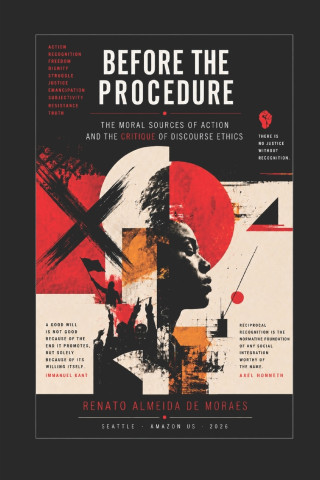
BEFORE THE PROCEDURE
Autor Renato Almeida de Moraes
One question, asked without evasion: what moves a human being to act politically?Contemporary political theory offers two answers. The subject acts to honor a rational procedure of justification - Habermas's answer. Or the subject ... celý popis


- Jazyk:
 Angličtina
 - Vazba: Brožovaná
- Počet stran: 174
Nakladatelství: Independently published, 2026
- Více informací o knize


Mohlo by se vám také líbit
-

Threshing Day (Wing and Claw Collection)
400 Kč -

Murdoku
319 Kč -

Threshing Day (Limited Deluxe Edition)
473 Kč -

Berserk Deluxe Volume 1
879 Kč -

White Nights
89 Kč -

What Happened Yesterday
380 Kč -

Berserk Deluxe Volume 2
918 Kč -

Berserk Deluxe Volume 3
782 Kč -

Onyx Storm (Deluxe Limited Edition) (The Empyrean, 3)
527 Kč -

Kid's Box New Generation Level 2 Activity Book with Digital Pack British English
251 Kč -

Jojo's Bizarre Adventure: Part 7--Steel Ball Run, Vol. 8
427 Kč -

Court of Thorns and Roses 6
358 Kč -

Dancing The Dream
482 Kč -

Yesteryear
335 Kč -

Kid's Box New Generation Level 1 Activity Book with Digital Pack British English
251 Kč -

The Courage To Be Disliked
206 Kč -

Kid's Box New Generation Level 3 Activity Book with Digital Pack British English
251 Kč -

Fourth Wing
552 Kč -

Iron Flame
552 Kč -

The Count of Monte Cristo
227 Kč -

Murdoku
373 Kč
Dárkový poukaz: Radost zaručena
- Darujte poukaz v libovolné hodnotě a my se postaráme o zbytek.
- Poukaz se vztahuje na celou naši nabídku.
- Elektronický poukaz vytisknete z e-mailu a můžete ihned darovat.
- Platnost poukazu je 12 měsíců od data vystavení.
Více informací o knize BEFORE THE PROCEDURE
Nákupem získáte 32 bodů
 Anotace knihy
One question, asked without evasion: what moves a human being to act politically?Contemporary political theory offers two answers. The subject acts to honor a rational procedure of justification - Habermas's answer. Or the subject acts to realize a shared conception of the good life - the communitarian answer. Before the Procedure contests the sufficiency of both and locates a third source of action, prior to the procedure and prior to inherited value: the moral motivations awakened by the experience of disrespect.What is new in this book• A distinction no one had drawn. Habermas offers a procedural morality: a discourse that tests norms already given. This book proposes a procedural ethics: the intersubjective itinerary - reconstructed with Mead and Honneth - through which the subject constitutes his identity and his values. The first begins where the moral subject is already complete; the second asks how that subject comes to be. The distinction is the book's own, and everything else follows from it.• Habermas taken seriously up to his limit. Not a rejection, but a reconstruction: the linguistic turn, the legal turn of Between Facts and Norms, the controversy with Rawls, the system of rights - read until the theory itself calls for its complement. The fifth category of rights, the book shows, is Habermas's own admission that form without material conditions is empty.• The communitarian and republican critiques sorted, not repeated. Which objections hit the target and which miss it; why Habermas's conflation of republicanism with communitarianism loses a conception of freedom as practice; what Taylor sees that liberalism cannot - and what Taylor cannot explain: how the individual parole breaks the langue that constitutes it.• A normative case study of Brazil. From the slave to the freedman, from the poor free man to the "subcitizen": three sociologies of slavery (Freyre, Fernandes, Carvalho Franco) and the synthesis Jessé Souza built on Bourdieu's habitus - a diagnosis of extraordinary power, and a prison without a door. The book keeps the diagnosis and opens the door.• Recognition as the engine of history. Love, rights, esteem; maltreatment, deprivation, degradation. Honneth's grammar of disrespect is reread as the procedure of moral formation that the discourse principle presupposes and never names - and defended against Nancy Fraser's reduction of recognition to participatory parity.• Dewey's reflexive democracy as the political form that follows: cooperation before consensus, the public as a cognitive medium rather than an argumentative tribunal.For whomScholars and students of political theory, critical theory, sociology of action, Latin American social thought, and the Habermas-Honneth-Fraser debate; readers of Taylor, Pettit, Skinner, Bourdieu, Mead and Dewey; anyone who has suspected that the procedure explains the form of legitimacy but not the energy that makes people claim it.How it is builtFour chapters and a conclusion, each opening with a mapped state of the art and advancing through named objections and named replies; 34 original figures and 9 analytical tables that carry the argument rather than illustrate it; a bibliography of 147 verified works across German critical theory, Anglo-American political philosophy, neo-republicanism, pragmatism, and Brazilian sociology.The thesis in one sentenceThe engine of historical transformation is neither the calculation of reason nor the weight of structure, but the moral experience of disrespect - which becomes struggle when it finds the grammar that makes it sayable.It is before the procedure, on the ground of the moral sources of action, that the fate of democracy is decided. This book goes there.
Parametry knihy
320 Kč
- Plný název: BEFORE THE PROCEDURE
- Podnázev: The Moral Sources of Action and the Critique of Discourse Ethics
- Autor: Renato Almeida de Moraes
- Jazyk: Angličtina
- Vazba: Brožovaná
- Počet stran: 174
- EAN: 9798172138140
- ID: 53783795
- Nakladatelství: Independently published
- Hmotnost: 242 g
- Rozměry: 229 × 152 × 9 mm
- Datum vydání: 05. September 2026
Osobní odběr Praha, Brno a 47904 dalších
Copyright ©2008-26 nejlevnejsi-knihy.cz Všechna práva vyhrazenaSoukromíCookies

 Vrácení do měsíce
 571 999 099 (8-15.30h)