Kód: 04517065
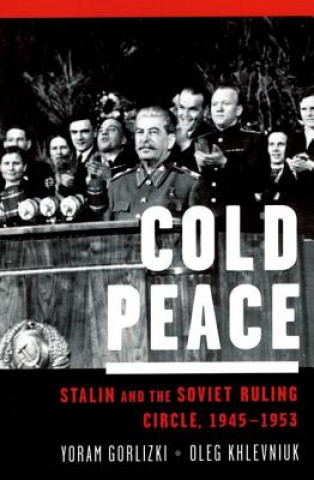
Cold Peace
Autor Yoram Gorlizki, Oleg Khlevniuk
Following his country's victory over Nazi Germany, Joseph Stalin was widely hailed as a great wartime leader and international statesman. Unchallenged on the domestic front, he headed one of the most powerful nations in the world. ... celý popis


- Jazyk:
 Angličtina
 - Vazba: Brožovaná
- Počet stran: 272
Nakladatelství: Oxford University Press Inc, 2006
- Více informací o knize


Mohlo by se vám také líbit
-

The Pumpkin Spice Café
206 Kč -
Stalin, Vol. I
400 Kč -

Portable Dorothy Parker
416 Kč -

Armageddon Averted
377 Kč -
The Return of Great Powers: Russia, China, and the Next World War
473 Kč -

Bezświt. Kroniki Nibynocy. Tom 3. Wydanie specjalne
397 Kč -

UEbungsbuch Italienische Grammatik fur Dummies
334 Kč -

Сила подсознания, или Как изменить жизнь за 4 недели
758 Kč -
Lucia in Wartime
272 Kč -

Nomad Century: How Climate Migration Will Reshape Our World
597 Kč -
Discovery of Mankind
607 Kč -

Poker For Profit: The Ultimate Guide to Poker Theory & Strategy
233 Kč -

Bogenhausen
478 Kč -

Hospitality to Strangers
570 Kč -

I've Got My Glasses On!
275 Kč -
Language and Society
2492 Kč -

Apicultor Practico Volumenes I, II & III Apicultor Natural
1317 Kč -

Aguaje Encantado
834 Kč -

Skutečný příběh sestry
134 Kč -

List of premiums and rules and regulations
368 Kč -

Public Service on the Brink
424 Kč -

Detour
728 Kč -

Fear and Greed
616 Kč -

Los Premonstratenses: su presencia en España (1143-1835).
511 Kč -

Clarisse Harlowe: Drame En Trois Actes, Mele de Chant
315 Kč -

England's First Great War Minister: How Wolsey Made a New Army and Navy and Organized the English Expedition to Artois and Flanders in 1513 (1916)
728 Kč -

Henry Clay, Volume 2
619 Kč -

Crows of Bosville, USA
401 Kč
Darujte tuto knihu ještě dnes
- Objednejte knihu a zvolte Zaslat jako dárek.
- Obratem obdržíte darovací poukaz na knihu, který můžete ihned předat obdarovanému.
- Knihu zašleme na adresu obdarovaného, o nic se nestaráte.
Více informací o knize Cold Peace
Nákupem získáte 118 bodů
 Anotace knihy
Following his country's victory over Nazi Germany, Joseph Stalin was widely hailed as a great wartime leader and international statesman. Unchallenged on the domestic front, he headed one of the most powerful nations in the world. Yet, in the period from the end of World War II until his death, Stalin remained a man possessed by his fears. In order to reinforce his despotic rule in the face of old age and uncertain health, he habitually humiliated and terrorized members of his inner circle. He had their telephones bugged and even forced his deputy, Viacheslav Molotov, to betray his own spouse as a token of his allegiance. Often dismissed as paranoid and irrational, Stalin's behavior followed a clear political logic, contend Yoram Gorlizki and Oleg Khlevniuk. Stalin's consistent and overriding goal after the war was to consolidate the Soviet Union's status as a superpower and, in the face of growing decrepitude, to maintain his own hold as leader of that power. To that end, he fashioned a system of leadership that was at once patrimonial-repressive and quite modern. While maintaining informal relations based on personal loyalty at the apex of the system, in the postwar period Stalin also vested authority in committees, elevated younger specialists, and initiated key institutional innovations with lasting consequences. Close scrutiny of Stalin's relationships with his most intimate colleagues also shows how, in the teeth of periodic persecution, Stalin's deputies cultivated informal norms and mutual understandings which provided the foundations for collective rule after his death. Based on newly released archival documents, including personal correspondence, drafts of Central Committee paperwork, new memoirs, and interviews with former functionaries and the families of Politburo members, this book will appeal to all those interested in Soviet history, political history, and the lives of dictators.
Parametry knihy
Zařazení knihy Knihy v angličtině Humanities History Regional & national history
1176 Kč
- Plný název: Cold Peace
- Podnázev: Stalin and the Soviet Ruling Circle, 1945-1953
- Autor: Yoram Gorlizki, Oleg Khlevniuk
- Jazyk: Angličtina
- Vazba: Brožovaná
- Počet stran: 272
- EAN: 9780195304206
- ISBN: 0195304209
- ID: 04517065
- Nakladatelství: Oxford University Press Inc
- Hmotnost: 402 g
- Rozměry: 232 × 155 × 16 mm
- Datum vydání: 26. January 2006
Oblíbené z jiného soudku
-

Hundred Years' War on Palestine
260 Kč -
Rubicon
317 Kč -

Bury My Heart At Wounded Knee
276 Kč -
History of the Kings of Britain
319 Kč -

Cuneiform
227 Kč -

Alexander the Great
380 Kč -
Osman's Dream
408 Kč -

How to be a Victorian
293 Kč -

'Tis
248 Kč -

On China
407 Kč -

Empress Dowager Cixi
325 Kč -
Ecclesiastical History of the English People
240 Kč -
Voynich Manuscript
1054 Kč -

We Were Soldiers Once...And Young
248 Kč -
Rise And Fall of Athens
373 Kč -

Colossus
248 Kč -

Austrian Commanders of the Napoleonic Wars
414 Kč -
Blood, Toil, Tears and Sweat
300 Kč -

Genghis Khan
381 Kč -

Origins of the Second World War
295 Kč -

Benjamin Franklin
365 Kč -

Children of Ash and Elm
400 Kč -
Campaigns of Alexander
312 Kč -

Diana: Her True Story - In Her Own Words
276 Kč -
Oxford History of Greece and the Hellenistic World
381 Kč -

Byzantium
336 Kč -

Florence
1268 Kč -

History of the Byzantine State and Society
1226 Kč -

Lords of the Horizons
293 Kč -
Annals & The Histories
350 Kč -

American Nations
303 Kč -

Badges and Uniforms of the Royal Air Force
336 Kč -

Spanish Civil War
323 Kč -

Berlin
276 Kč -
Winston Churchill
402 Kč -

Imagining the Balkans
875 Kč -
Inventing Eastern Europe
673 Kč -

Unfinished Empire
293 Kč -

German Fighter Ace Werner Molders:: An Illustrated Biography
860 Kč -
Two Lives of Charlemagne
288 Kč -

Secret History of the IRA
424 Kč -

Thracians 700BC-46AD
360 Kč -

Paston Letters
241 Kč -

Attila and the Nomad Hordes
414 Kč -

Middle Ground
723 Kč -

Promised You A Miracle
315 Kč -

Black Athena Writes Back
995 Kč -

Brief History of the Private Lives of the Roman Emperors
382 Kč -

Rising '44
445 Kč
Osobní odběr Praha, Brno a 46512 dalších
Copyright ©2008-26 nejlevnejsi-knihy.cz Všechna práva vyhrazenaSoukromíCookies

 Vrácení do měsíce
 571 999 099 (8-15.30h)