Kód: 04544073
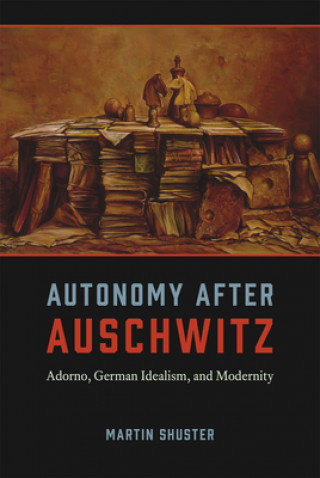
Autonomy After Auschwitz
Autor Martin Shuster
Ever since Kant and Hegel, the notion of autonomy - the idea that we are beholden to no law except one we impose upon ourselves - has been considered the truest philosophical expression of human freedom. But could our commitment t ... celý popis


- Jazyk:
 Angličtina
 - Vazba: Pevná
- Počet stran: 216
Nakladatelství: The University of Chicago Press, 2014
- Více informací o knize

1287 Kč

Skladem u dodavatele v malém množství
Odesíláme za 13-18 dnů
Potřebujete více kusů?Máte-li zájem o více kusů, prověřte, prosím, nejprve dostupnost titulu na naši zákaznické podpoře.
Přidat mezi přání
Mohlo by se vám také líbit
-

Steven Spielberg
580 Kč -

Double Bass Blues
351 Kč -

Ro-Bo
391 Kč -

Falene
305 Kč -

J'Apprends ? Écrire Activité Montessori Pour Préparer Mon Enfant ? Lire Et ? Écrire Livres Bilingue Croate Francais: I can write several short sentenc
299 Kč -

Die Entdeckungen der Normannen in Amerika
691 Kč -

Aurality
706 Kč -

Proceedings of the ... Convocation
471 Kč -

Some Diversions of A Man of Letters
237 Kč -

Basics of Geomorphology
689 Kč -

Kleine Geschichte Stuttgarts
228 Kč -

Bobbie Gentry's Ode to Billie Joe
365 Kč -

One Of A Mob (1905)
575 Kč -

Advances in Knowledge Acquisition
1182 Kč
Dárkový poukaz: Radost zaručena
- Darujte poukaz v libovolné hodnotě a my se postaráme o zbytek.
- Poukaz se vztahuje na celou naši nabídku.
- Elektronický poukaz vytisknete z e-mailu a můžete ihned darovat.
- Platnost poukazu je 12 měsíců od data vystavení.
Více informací o knize Autonomy After Auschwitz
Nákupem získáte 129 bodů
 Anotace knihy
Ever since Kant and Hegel, the notion of autonomy - the idea that we are beholden to no law except one we impose upon ourselves - has been considered the truest philosophical expression of human freedom. But could our commitment to autonomy, as Theodor Adorno asked, be responsible for the extreme evils that we have witnessed in modernity? In Autonomy After Auschwitz, Martin Shuster explores this difficult question with astonishing theoretical acumen, examining the precise ways autonomy can lead us down a path of evil and how it might be prevented from doing so. Shuster uncovers dangers in the notion of autonomy as it was originally conceived by Kant. Putting Adorno into dialogue with a range of European philosophers, notably Kant, Hegel, Horkheimer, and Habermas - as well as with a variety of contemporary Anglo-American thinkers such as Richard Rorty, Stanley Cavell, John McDowell, and Robert Pippin - he illuminates Adorno's important revisions to this fraught concept and how his different understanding of autonomous agency, fully articulated, might open up new and positive social and political possibilities. Altogether, Autonomy After Auschwitz is a meditation on modern evil and human agency, one that demonstrates the tremendous ethical stakes at the heart of philosophy.
Parametry knihy
Zařazení knihy Knihy v angličtině Humanities Philosophy Social & political philosophy
1287 Kč
- Plný název: Autonomy After Auschwitz
- Podnázev: Adorno, German Idealism, and Modernity
- Autor: Martin Shuster
- Jazyk: Angličtina
- Vazba: Pevná
- Počet stran: 216
- EAN: 9780226155487
- ISBN: 022615548X
- ID: 04544073
- Nakladatelství: The University of Chicago Press
- Hmotnost: 446 g
- Rozměry: 240 × 160 × 20 mm
- Datum vydání: 12. September 2014
Oblíbené z jiného soudku
-

The 48 Laws of Power
416 Kč -

End of History and the Last Man
336 Kč -

Free Will
224 Kč -

Calendar of Wisdom
205 Kč -

Prince: The Original Classic
270 Kč -

Lean Thinking
606 Kč -

Between Past and Future
319 Kč -

Essential Drucker
285 Kč -

Years of Rice and Salt
243 Kč -

The Republic
250 Kč -

One-Dimensional Man
541 Kč -

BIRTH OF BIOPOLITICS
397 Kč -

Future of Nostalgia
588 Kč -

On The Abolition Of All Polictical
227 Kč -

To Have or To Be?
633 Kč -

Race, Nation, Class
367 Kč -

Rising Up and Rising Down
397 Kč -

Progress
467 Kč -

Concept of the Political - Expanded Edition
629 Kč -

Frames of War
318 Kč -

Common Sense, The Rights Of Man And Other Essential Writings
174 Kč -

Small Arcs of Larger Circles
547 Kč -

Managing Your Manager: How to Get Ahead with Any Type of Bos
437 Kč -

Making of the Indebted Man
256 Kč -

Ego and His Own
709 Kč -

Lectures on the History of Political Philosophy
791 Kč -

Dividuum
317 Kč -

Studies of Political Thought from Gerson to Grotius
795 Kč -

This Wheel's on Fire
323 Kč -

Politics of Affect
528 Kč -

Experience Machines
1368 Kč -

Struggle for a Christian Politics
218 Kč -

A Conflict of Visions
611 Kč -

Platform Capitalism
282 Kč -

On Practice and Contradiction
482 Kč -

Rene Girard's Mimetic Theory
917 Kč -

German Ideology
282 Kč -

Beyond Nature and Culture
948 Kč -

Zapp!: the Lightning of Empowerment
318 Kč -

Methodology of Scientific Research Programmes: Volume 1
608 Kč -

Ascent of Humanity
531 Kč -

Philosophy of Mathematics
1230 Kč -

Fashion System
601 Kč -

Discourse on Inequality
195 Kč -

Republic of Plato
480 Kč -

Ideas Have Consequences
564 Kč -

Post-Truth
287 Kč -

Facing Gaia
556 Kč -

Political Philosophy
482 Kč
Osobní odběr Praha, Brno a 46512 dalších
Copyright ©2008-26 nejlevnejsi-knihy.cz Všechna práva vyhrazenaSoukromíCookies

 Vrácení do měsíce
 571 999 099 (8-15.30h)